Pages

The Life From The Roots blog topics have changed several times since I began this blog in 2009. I initially wrote only about the family history I had been working on for 20 years. Years later, I was into visiting gardens, historical homes, churches, libraries that had genealogical collections, historical societies, war memorials, and travel/tourism places. I also enjoy posting autographs and photos of famous people I've met or have seen.

Along with my New England roots, other areas include New York, New Jersey, Michigan, Illinois, Wisconsin, and the Eastern Townships of Quebec, Canada.

Please check out the labels on the right side for topics (please note, they need work). Below the labels and pageviews is a listing of my top nine posts, according to Google. Four of them pertain to Lowell, MA. These posts change often because they are based on what people are reading.
Showing posts with label Census. Show all posts

Tuesday, March 1, 2022

The Librarian's Guide Might Help You With Your Research

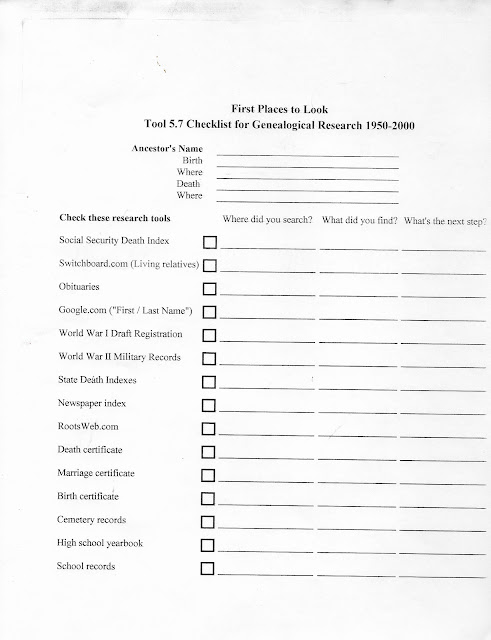
First the background, then the forms

When I first wrote about this guide, The Librarian's Guide go Genealogical Services and Research in October 2010, I knew it was something that could help genealogists with their research. Over the years, I was always aware that people were looking at this blog post. Six months ago I was able to track how many people were looking at it out because I only wrote posts about the city I live in and that made it easy to look at the Google statistics. My Lowell posts were very high in readership, but I always saw at least  20-30 hits for this post in the top 10 for each day. The total of hits since 2010 per Google is over 3,400.

I recently purchased the book from Amazon, now out of print, and I lucked out with a brand new-looking book with a CD, it came from a library. So I decided to write about this guide again because of the interest many of us have in the 1950 census (being released on April 1, 2022). So, many hours were spent last week trying to get in touch with the publisher for permission to use the forms again. I couldn't find the author anywhere, and the publisher seems to have disappeared (Neal-Schuman Publishers, Inc.) but I learned it is now under the wing of the ALA (American Library Association). Well, it seems I know about that organization because my great, great grandfather was an early president of it. (William Frederick Poole). So, happily I called and left messages for the research department...four times and never heard back. Again, I called the main number and got a 25-year dedicated employee who told me I should be talking to the copyright department. Yes, well I left a message and nothing.

Fast forward to five days ago when I reread my initial post. Low and behold, per that post, "I indicated I wrote to the publisher for permission to share some examples with you. He responded today (Oct. 4, 2010), and wrote this: "This is fine. Please just add a line to each:  Reprinted with permission from <book title> by James Swan.  Copyright 2004 by James Swan.  All rights reserved. Based on this, I am sharing some forms that might help you. Some were from years ago and some from photos.

My two previous posts (Oct. 1, 2010, and Oct. 4, 2010) about the book are:

http://lifefromtheroots.blogspot.com/2010/10/follow-friday-librarians-guide-to.html 

I explain a lot about the book, table of contents, and where you can find it (WorldCat).

https://lifefromtheroots.blogspot.com/2010/10/librarians-guide-to-genealogical.html

I am not doing a review of the 356-page book because it is not in print. This is his sixth book. There are few websites listed, but I imagine many have been changed. Mr. Swan's forms are valuable to us and will be for many years.

All reprinted with permission from The Librarian's Guide to Genealogical Services and Research by James Swan.  Copyright 2004 by James Swan.  All rights reserved.

All reprinted with permission from The Librarian's Guide to Genealogical Services and Research by James Swan.  Copyright 2004 by James Swan.  All rights reserved.

All reprinted with permission from The Librarian's Guide to Genealogical Services and Research by James Swan.  Copyright 2004 by James Swan.  All rights reserved.

`
All reprinted with permission from The Librarian's Guide to Genealogical Services and Research by James Swan.  Copyright 2004 by James Swan.  All rights reserved.

All reprinted with permission from The Librarian's Guide to Genealogical Services and Research by James Swan.  Copyright 2004 by James Swan.  All rights reserved.

All reprinted with permission from The Librarian's Guide to Genealogical Services and Research by James Swan.  Copyright 2004 by James Swan.  All rights reserved.

All reprinted with permission from The Librarian's Guide to Genealogical Services and Research by James Swan.  Copyright 2004 by James Swan.  All rights reserved.

About 164 libraries in the United States have this book according to WorldCat.org.


Thursday, February 28, 2013

Colorful Indexes Were My Lazy Man's Way to Research

Before any of the census images were online, you had to go to a National Archives and Records Administration (NARA) location, either in Washington, DC or one of the several branches throughout the United States, to see the censuses. Then to locate your particular film, you could borrow or purchase a census booklet, Population Census Schedule, for the census year you were searching... this method really felt like researching. It was far more time-consuming, yet more rewarding than typing in a name on Ancestry. (Note: the first census had 12 rolls, the 4th census had 142 rolls.)

There was a second way to see what was in a census. It was my lazy man's way, but not everybody could do this. You had to have access to the census books. Fortunately, there was a collection of them at the NARA Boston (Waltham) branch, where all the census rolls were also located. However, the New England Historic Genealogical Society Library (NEHGS) has a much larger collection of books (shown in photos), because they didn't have all the census rolls for the entire United States, as the NARA did. NEHGS made up for the absence of census film rolls by providing these books. The books begin with the first census, 1790 and many ended many years later when the books got too large to continue.

I discovered early on my lazy man's way of research. If I was working on somebody listed in the 1870 census book, I'd quickly look him up in the 1860, then 1850 and so forth. Naturally they weren't always in the same town or state, but for the most part I was able to find many people. Below are several of the books, then an example of the 1790 for Connecticut, which I used many times. The listing appears to go in order of the census taker's visits, so you can see easily the FANs (Friends Associates and Neighbors). However, some census books were done alphabetical (see example).
Connecticut and New Hampshire, New York (above and below).

Texas, Utah and Vermont above.
Census lists show order of visits and alphabetical.

  The 1860 Mortality book for Connecticut (listing of deceased below).


Saturday, April 7, 2012

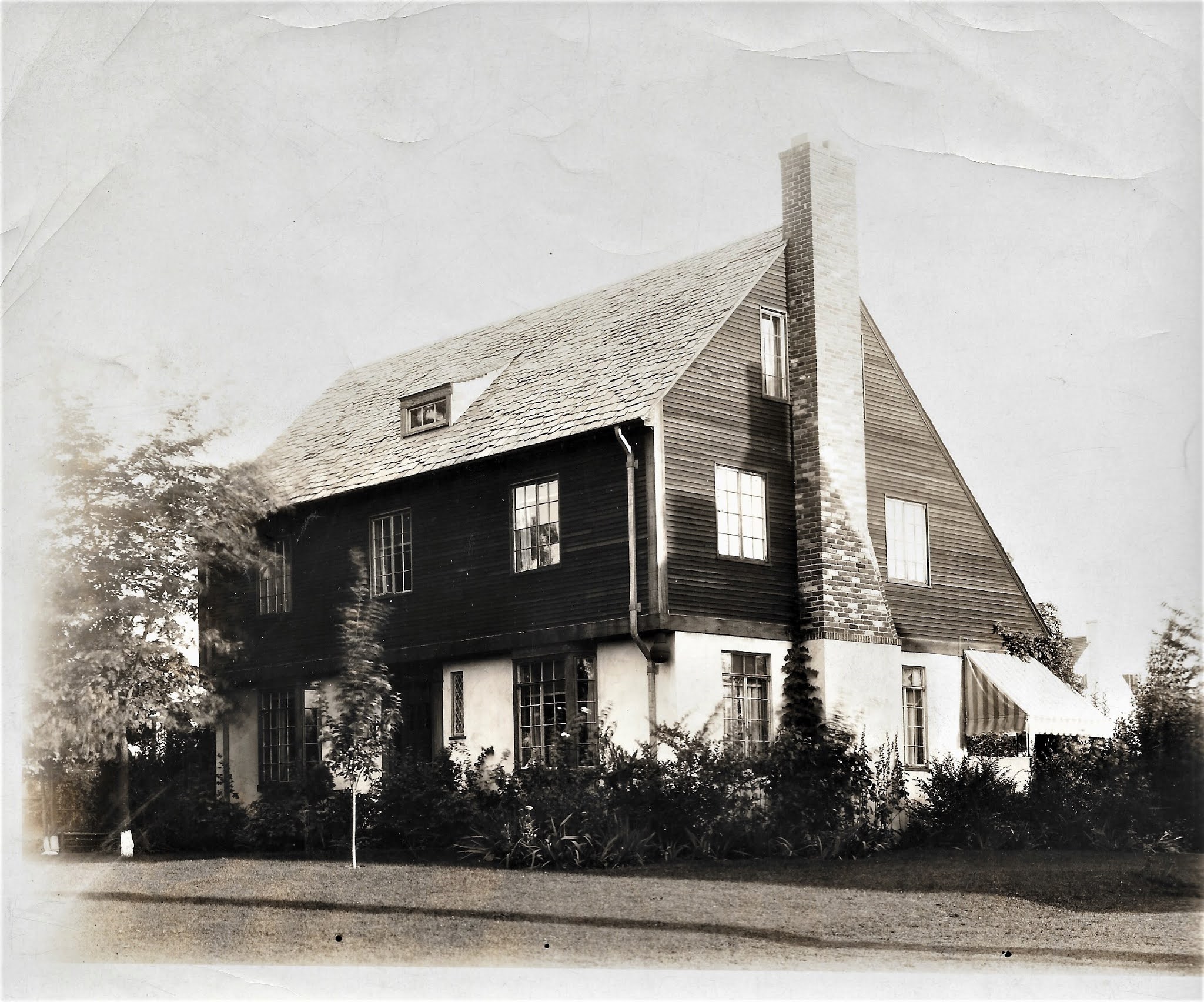
90 Adams Street, A Very Special Place

My first nine months were spent at 90 Adams Street, New Britain, Connecticut. This house was designed by my grandfather, an architect, and I just saw it for the first time a few days ago. It was and wasn't what I expected. The English style was my grandfather's taste, having spent almost every summer living in London for many years. He loved England. I didn't expect it to look so small, boxy, have a small yard, no other house looked like it. The house he built after this for his family was huge, and also brown, all brown, but was more modern in style and had a big yard.

On April 1, 1940, my grandparents had already been living 10 years here, as indicated by the 1930 census. In 1940, the household consisted of my grandparents, my mother age 19 (attending college, in New York), and two other children. A few years later, my mother graduated from college, got married, then got pregnant and moved back home to have me. My dad had just entered the Navy, stationed in Oakland, California. My grandmother was the nurse at my birth. So I imagine the house was a bit noisy until mom and I moved to California alone, and to wait out the war.

I have been to this city many times to visit the grandparents but never gave any thought to where my mother might have played outside, nor where I first lived. Thanks to all the bloggers who have been locating where their families lived and checking google maps and pictures for images of their old homes, and sharing their information. Because of them, I began thinking about my own grandparents. Since New Britain is about 100 miles from me, I knew I had to make a trip immediately. Now I know what the house looks like, and it's a great feeling, just knowing.


This early 30s photo is from my grandfather's portfolio of buildings and houses he built.
1940 Census, New Britain, Connecticut

Sunday, April 1, 2012

What is Happening on April 2, 2012?

What are you doing on April 2, 2012? I bet one of two things. Either trying to locate your ancestors or family members in the 1940 census or digging right in and helping with the indexing. Do you know what I'm talking about? I bet there isn't a genealogist in the United States who doesn't know about this event. But there are probably a lot of other folks who happen to read this blog for whatever reason, and don't have a clue. Most bloggers have already written a piece about this soon to be released census. Bloggers have even talked about things that happened in the 40s, I will too at another time.

Let me share with you some information regarding the 1940:

Thousands of volunteers will be helping with the indexing. To do your part in helping this historic document get seen by everybody as quickly as possible, just sign up at The1940Census.org *. Scroll to the bottom and try out the indexing software for an example. It's easy, terribly simple...you know, if I can do it (with bad eyes), then you can too. You would be helping all genealogists as well as making your research easier too. You can choose your state, I selected Massachusetts, since I've lived in three towns there, but no family was there in 1940. You can select a genealogical society to get credit as well, I chose Connecticut Society of Genealogists, CSG.

*At the bottom of the above sign-in page, you will see:

DOWNLOAD THE INDEXING SOFTWARE

DOWNLOAD THE SOCIETY GETTING STARTED KIT


Did you notice that I said you could find your family in the 1940 immediately? But you now know there is no index. How is that possible? Well, you'll have to do some work. See the second blog for more information.

A few excellent blogs regarding the 1940, in far more detail than provided above:

Connie Potter on the 1940 Census by Judy G. Russell (please look at the video)

Gear up for 1940 Census Indexing and Researching by Thomas MacEntee (see article by Steve Morse on how to find out where your ancestor's / family were living and how to find them immediately on the 1940 census without an index)

My 1940 U.S. Census Compendium by Randy Seaver (lots of good blogs about the 1940 census project)


What will I be doing? Indexing of course. (Note: This goal did not work out for me. I have a eye condition, that made it difficult to read and transcribe in a timely fashion. I thought I could, but..., I would often see 140, instead of 1940, so that's a major problem). With 566 ancestors and related family members listed in the 1930 census, I probably have more than 566 to look up,  so I'll wait for the completed index. My grandparents were all living in the same house as the 1930 census and my parents were both away at college, in New York, in 1940. Have fun with the indexing everybody and I hope we all share on face book or through blogs what towns or cities we are working on. If you don't use fb or blog, why not share in the comment section of this blog. Thank you everybody for doing your part in the indexing, and remember, the more who do it, the quicker it will get done.

Note: As part of the 1940census.com ambassador program this blog post enters me into a drawing for weekly prizes. Regarding this disclosure, I can assure you I am not doing this for the Gift Certificate, and I doubt anybody else is too.


https://www.familysearch.org/1940census/

Saturday, March 31, 2012

Have You Heard the Latest?

1940 US Census Project Update
Release of Images in Two Days!


Get Ready, Get Set . . .

Thank you for your interest in the 1940 US Federal Census. This will be the last email you receive on behalf of the 1940 US Census Community Project before the images start to become available online.
 

What You Can Expect on April 2

The 1940 US Census Community Project is creating an index to the 1940 US Federal Census that will be made available for free. This is a joint effort between Archives, FindMyPast, FamilySearch, hundreds of societies, and tens of thousands of individual volunteers. The resulting index will be made available on the websites of the primary sponsors.
 
On the morning of Monday, April 2, NARA will release the digital images of the 1940 census to multiple parties, including the 1940 US Census Community Project. We will immediately start uploading these 3.6 million images to servers, where they will become available online over time.The ability for people to start accessing some of these images through the community project will take hours, not minutes.
 
As the first five states are loaded to servers, corresponding projects will be set up to index those images as state projects. We anticipate the first five states will be available for volunteer indexing by 10pm EDT.
 
The first five states to be loaded and ready for indexing on April 2 are the following:
  • Delaware
  • Virginia
  • Kansas
  • Oregon
  • Colorado
The process of uploading images and setting up indexing projects by state will continue until all of the states and territories for this project are published, which may take up to two weeks to complete. Every day more images will be made available for browsing and indexing, so you will want to check back often to see which states are available.
 
The indexing process will be taking place through FamilySearch indexing. If you are already a FamilySearch indexing volunteer, these 1940 census projects will appear as new projects in the indexing software. No new software download or registration process is necessary to participate. If you are not currently a volunteer but want to participate in this historic opportunity, get started by downloading the indexing software and registering today.
 

What You Can Do Now

  1. Download and install the indexing software
    Watch an Overview | Get Started
  2. Learn how to index the 1940 US Census
    Watch a Video | Try the 1940 Census indexing simulation
  3. Let others know about the 1940 US Census Community Project
    Like the Facebook page | Follow @The1940Census on Twitter | Follow the page on Google+ | Tell friends about the1940census.com
You can keep up with the latest updates by visiting the1940census.com often over the next few weeks.Thank You!
The 1940 US Census Community Project Team
© 2012 1940 Census Community Project. All rights reserved.  Unsubscribe | Preferences