Pages

The Life From The Roots blog topics have changed several times since I began this blog in 2009. I initially wrote only about the family history I had been working on for 20 years. Years later, I was into visiting gardens, historical homes, churches, libraries that had genealogical collections, historical societies, war memorials, and travel/tourism places. I also enjoy posting autographs and photos of famous people I've met or have seen.

Along with my New England roots, other areas include New York, New Jersey, Michigan, Illinois, Wisconsin, and the Eastern Townships of Quebec, Canada.

Please check out the labels on the right side for topics (please note, they need work). Below the labels and pageviews is a listing of my top nine posts, according to Google. Four of them pertain to Lowell, MA. These posts change often because they are based on what people are reading.
Showing posts with label Parks. Show all posts

Wednesday, November 12, 2014

There Is A Lot to Like About Lowell -- Shedd Park and Rogers Fort Hill

"There is A Lot to Like About Lowell" is the city slogan.
(See tab on right side called "Lowell Series" for many more articles about Lowell.)


Shedd Park and Rogers Fort Hill


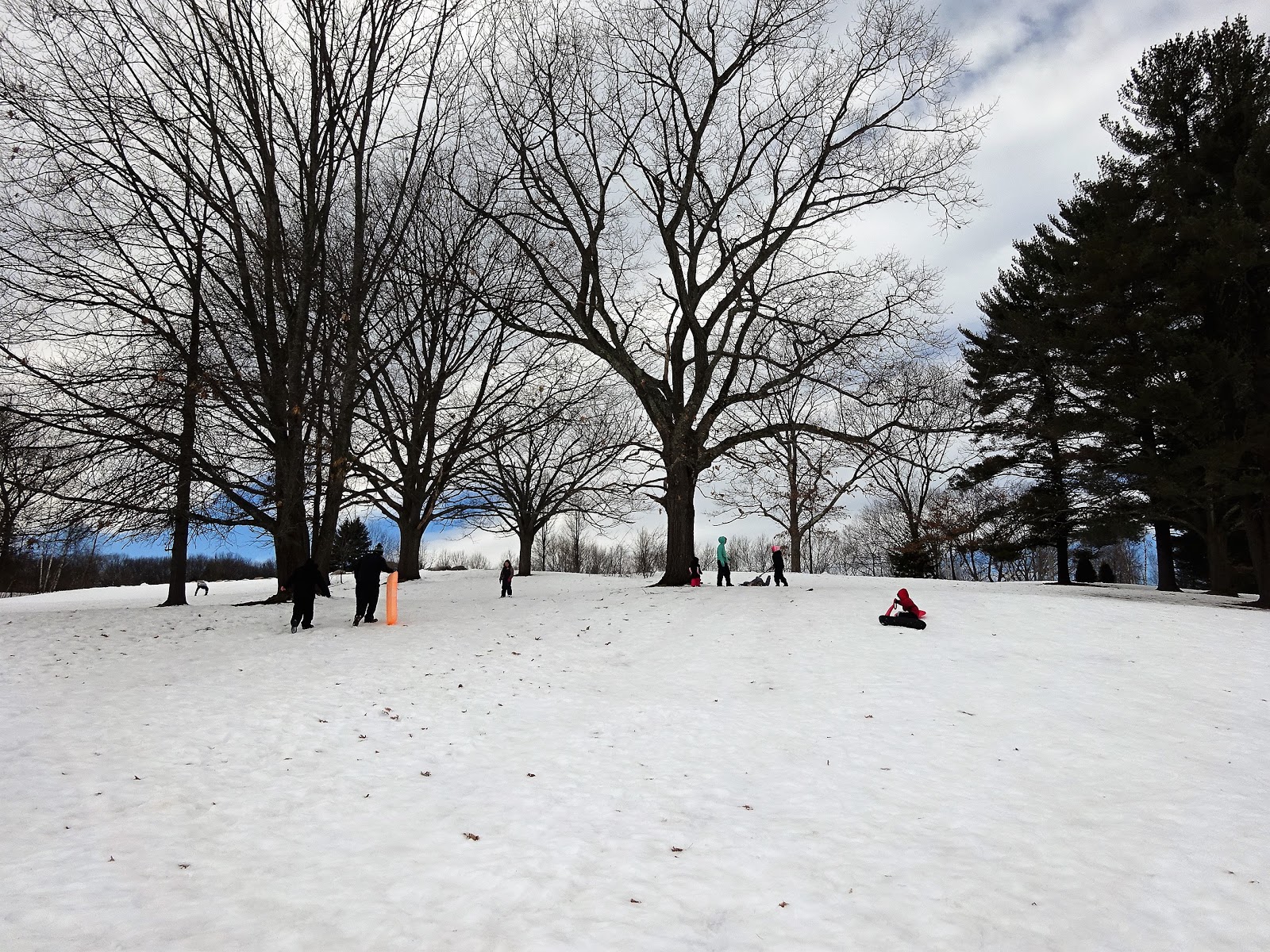
Shedd Park and Fort Hill Park are separate parks, but adjoin each other. Shedd Park has fifty acres to provide a wonderful place for families to go for their outdoor activities. Hiking, tennis, huge playground, sledding in the winter, picnic fun and other activities are available. There is a complete history report in the Forgotten New England blog, seen HERE.
Corner of Boylston and Roger Streets.


Shedd
Playground
----
A Gift To the
City of Lowell
By
Freeman Ballard Shedd
A. D. 1910
"Rogers Fort Hill Park has 11 acres of grass, a fountain, paths and gardens, and 23 acres of woods.  Today, the park is being restored to its former glory. The vision is to bring back the features of the original design. Part of the lower park is already restored, and, in time, a restored Spring House at the base of the hill, and benches and walkways will grace the park land. There will also be a west side pergola.
The park will have a commemorative garden, to recognize the original settlers of the area, who were Native Americans. It will also commemorate the life of Senator Paul Tsongas, who is dedicated to the park. The park will be linked to a Greenway and a Blueway trail system, with a stairway down to the river. There will also be a play fort for kids and a restored Spring House." "In the 1900s, the park had activities including a zoo and winter carnivals. The park slipped into a decline in 1960, however, because of budget cuts, but this trend is being reversed with the help of the City of Lowell and many volunteers. The Park was added to the National Register of Historic Places in 1999." (This was new to me, so I'm glad I found this site, seen HERE.) Because this is a genealogy blog, I must mention that the Lowell Cemetery is next to both parks.
 
 Rogers Street to the left of the park, center of the park is below.

Top of Fort Hill.

Me, late 1960s at the top of Fort Hill.
 Sledding down Shedd Park's hill (Feb. 2017).


Friday, October 11, 2013

Brook Farm in Roxbury, Massachusetts and How it Relates to Me


When I discovered back in January that my 2nd great-grandfather surveyed a property in West Roxbury, Massachusetts for the city, I immediately became interested in learning more. Thanks to the Massachusetts Historical Society (MHS) in Boston for giving me additional information and confirmation that he indeed did a map of Brook Farm in Roxbury, June 1849, and it is in their collection. 

Fast forward to nine months, I just went to Brook Farm, now a Historic site, you'll see the photos below. The Farm consists of 179 acres of "rolling fields, woodlands and wetlands" and one lonely building. I love knowing that my ancestor, Charles H. Poole surveyed this land in the late 1840s as well as the town of Roxbury and Long Island, in Boston Harbor.

I'll quote what is written about the Farm in the brochure prepared by the Dept. of Conservation and Recreation for Massachusetts. "Founded in (October 11) 1841 at the height of the Transcendental movement, an experimental society of men, women and children had dreams of leading a more wholesome and simple life. The Farm's members and visitors included renowned authors and philosophers Nathaniel Hawthorne, Charles Dana, Ralph Waldo Emerson and Margaret Fuller."

"Utilized in later years for a poorhouse, Civil War training camp and orphanage, the site reflects a theme of social consciousness and reform." Visitors are free to roam around the Farm, and even picnic there. Since I had been waiting nine months to visit, I was terribly excited to be there, even though, it's less than an hour from home."

The Community disbanded six years after its inception. A loss of their residential building due to fire, and other reasons were partly to blame. In 1861 the Second Massachusetts Infantry Regiment used the land for military training. In 1872 Martin Luther Orphan's Home was opened, and remained there until 1943. Later, in 1948, the Brook Farm Home, a treatment center and school opened, closed in 1974.

The history doesn't stop here. The land has a much older past. In February, I read in the Boston Globe an article about the Farm and the "display of artifacts found during excavations in the 1990s at the historic Brook Farm site." On display at the lab are over 100 artifacts from Brook Farm highlighting the diverse uses of the property, including a 5,000 year old Native American spear point, colonial artifacts, painstakingly reconstructed ceramic serving dishes used by the Brook Farmers, the only physical remains of the massive Phalanstery building, as well as architectural elements and personal items from the Utopian community. The later use of the property is represented by Civil War-era items from Camp Andrew, and toys from an orphanage run out of the Hive building - the heart of Utopian-period community." I spoke with the City Archaeologist, and asked him some questions. Unfortunately some of the exhibit is being removed this weekend, so I won't get to see it.

"Brook Farm was one of the first sites in Massachusetts to be listed on the National Register of Historic Places and designated a National Historic Site." There is quite about this Farm from Wikipedia.

The Print Shop was built in the 1870s for the Orphanage. Other buildings have burned.
Images from West Roxbury Historical Society and Google may be seen HERE.


 1861 -1865
Second Massachusetts Infantry
Recruited Mustered and Drilled
on These Grounds
Known as Camp Andrew
Left Here for the War for the Union
July 8, 1861
Some of the wetlands.


While looking at an exhibit at the Fruitlands Museum, in Harvard, Massachusetts, with a blogger friend, I noticed the mention of 1841 when Brook Farm was founded (above and below).
Also see:

MassMoments article titled: "Utopians Purchase Brook Farm"

From correspondence I had with the Society in January 2013.

"I found the following item which is directly attributed to Charles H. Poole:

Call number(s):      Mss. Large 1849 June
Contained in:     In Mss. Large Manuscripts.
Creator:     Poole, Charles H.
Title:     Manuscript map of Brook Farm, June 1849
Description:     Scale 1:3600.
    1 manuscript map : pen and ink and watercolor; 37 1/2 x 55 cm.
Scope:     A manuscript map of the property of Brook Farm.
Local notes:     From the Perry-Clarke papers."


From a facebook page I received, is the following interesting article.

One of the collections management features we added this year is a new system to convert our digital catalog data automatically into formatted archival tags. These tags not only will live with the artifacts themselves in their archival bags, but also serve as labels and scales in the photos we are now taking of every artifact we process. This year we have already taken over 20,000 artifact photos, and are actively uploading them into a searchable artifact database, which we will launch soon. #collectionsmanagement #archaeology #digbos

Wednesday, September 25, 2013

Saugus Iron Works, Saugus, Massachusetts

Saugus Iron Works, Saugus, Massachusetts
Iron works house above, ca. 1680s.

Birthplace of the American Iron Industry. Information from the Saugus Iron Works National Historic Site states "On September 17, 1954, The First Iron Works Association celebrated the grand opening of the Iron Works Reconstruction. They even brought in live oxen for the event!" This is a lovely nine-acre park, fun to stroll around, go into the reconstructed buildings, and learn. Our August 24, 2013 visit was a perfect day and I had to take a lot of photos. I couldn't decide which ones to delete.


Early photo of the park, posted on Facebook by the Saugus Iron Works National Historic Site. A more current view is above.


  Even though there was a Do Not Touch sign, I touched the old foundation before I saw the sign.


Saugus Iron Works, Saugus, Massachusetts
National Historic Site

Massachusetts Moments posted an article called "Winthrop Buys Passage for Ironworkers, May 5, 1643." May be seen HERE.


Thursday, September 19, 2013

Kittredge Park, Lowell, Massachusetts

 Kittredge Park, Lowell, Massachusetts
Many old timers of Lowell remember when Sen. Paul Tsongas planted, watered and tended to the gardens. He lived just a few streets away on Mansur Street.

Update: Recently Eileen, of the Lowell Doughboys and more... blog wrote a post about Paul Edward Kittredge, for whom this park is named after. Please read HERE.

Monday, May 27, 2013

World War I Monument -- Chelmsford, Massachusetts

World War I Monument at Vinal Square
North Chelmsford, MA
To the Glory of God
and in
Grateful Memory
of the
Men of Chelmsford
who made
the supreme sacrifice
in the World War
1917 - 1919
Wagoner
Alberton W. Vinal
Enlisted
Co. K 6th Inf. Mass. N. G.
Transferred
101st Eng. Train. 26 Div. U. S. A.
Apr. 13, 1917.
Killed in Action at Boucq, France
June 19, 1918.
Corporal
George R. Quessy
Enlisted
Btry. B. 2nd F. A. Mass. N. G.
Transferred
Stry. F 102nd F. A. 26th Div. U. S. A.
Apr. 16, 1917.
Killed in Action at Gloveaux, France
Nov. 1, 1918.
Lieutenant
Egbert F. Tetley
Commissioned
Aug. 15, 1917.
Assigned to
Co. C. 47th Inf. 4th Div. U. S. A.
Killed in Action at Bazoghes, France
Aug. 10, 1918.

Sunday, May 26, 2013

Chelmsford, MA Vietnam Memorial and Park Photos

I knew a lot of men who were either drafted or enlisted into the Vietnam War. Some were classmates, some were co-workers of mine, when I was in the Army, and one was a close neighbor. I always knew the neighbor died in action, but little did I know there was a memorial dedicated to those from Chelmsford who died. I probably pass by this park twice a month, and have never stopped until two weeks ago. I was a little taken back to find my neighbor's name, John F. Bettencourt, on this memorial.
 IN
HONOR
OF THOSE
FROM
CHELMSFORD
WHO SERVED
****
IN
MEMORY OF THOSE
WHO FELL
****
THE VIETNAM WAR
1959 - 1975
John F. Bettencourt
18 Dec 1946 - 16 Nov 1967
U.S. ARMY

Kenneth R. Hughes
9 July 1946 - 28 Mar 1969
U. S. ARMY

Peter V. Blazonis
9 Sept 1948 - 18 June 1969
U. S. ARMY

James A. Doughty
11 Oct 1948 - 28 Aug 1969
U. S. ARMY

 Memorial on the left.

World War I memorial in the middle, end of park. Will be posted tomorrow.