Pages

The Life From The Roots blog topics have changed several times since I began this blog in 2009. I initially wrote only about the family history I had been working on for 20 years. Years later, I was into visiting gardens, historical homes, churches, libraries that had genealogical collections, historical societies, war memorials, and travel/tourism places. I also enjoy posting autographs and photos of famous people I've met or have seen.

Along with my New England roots, other areas include New York, New Jersey, Michigan, Illinois, Wisconsin, and the Eastern Townships of Quebec, Canada.

Please check out the labels on the right side for topics (please note, they need work). Below the labels and pageviews is a listing of my top nine posts, according to Google. Four of them pertain to Lowell, MA. These posts change often because they are based on what people are reading.

Monday, March 28, 2016

A yacht, a home owner, a visitor to the Lowell house, and a housekeeper

One of the benefits of blogging is you often hear from people who read your post and wanted to either leave a comment or write you personally to share some information. As shown below, I received emails from several people who offered bits of information about Mr. Fay, a person none of them is related to, because he didn't have children or family, nor did any know him because he died in 1944. There always seemed to be a lot of unknowns and mystery regarding the extremely wealthy Mr. Fay, and later members of the Donehue family, because for over 53 years, I'm still hearing stories, like the ones below. The messages to me are interesting and will give you an example of what you might receive from a reader of your own blog.

Within a four-month period in 2014, I heard from four different individuals all sharing information about a Mr. Auburt J. Fay. He was important to me, because he founded the company where I worked at for over 10 years. Everybody knew of the Father John's Medicine Co., Inc. and it continued manufacturing the medicine until about 1976. The old massive downtown brick building is now used for elderly housing.

One person told me she saw and is familiar with Mr. Fay's yacht (wait until you read who later owned it), one is a relative of the person living in Mr. Fay's old house, another person purchased a summer home belonging to Mr. Fay in Connecticut, and the last person told me her aunt was a housekeeper in Mr. Fay's home! After Mr. Fay's death, George H. Donehue Sr. become president and lived in the house with Mrs. Fay until she died in 1965. He died in 1967, then oldest son, Gerald Donehue, became president and moved into the large Fay house (or maybe he was living there all along because he didn't have children). At one time, all three Donehue men worked in the office at Father John's Medicine while I was employed as their secretary.

The Aubert J. Fay home, later home to two Donehue presidents.

#1  From Barbara in late May 2014


My name is Barbara ____ and my brother came across your blog and forwarded it to me as I am the family genealogist.
I enjoyed reading your blog and finding out that we have some things in common besides our name!
I also enjoy genealogy, gardening, and photography!
But besides that, it was very interesting to learn of your working for Father John's Medicine Company and knowing the Donehue Family and being in that beautiful White House (I believe was on Mansur St).

I was also in that house as a young teen in 1967 while my parents, sister and I visited George Sr., George Jr, and Gerald.  My sister and I stayed with George and Marion and my parents stayed overnight in the house with Gerald and his father.  My grandfather is Herbert Donehue and is George Sr.'s brother.  Herbert moved to Detroit in 1919 where he and his wife Rose Hannon (also of Lowell) had 2 sons Raymond and Francis. My father was Raymond and he stayed in touch with Gerald until his death.

Thank you for posting your experience with the Donehue family and memorializing them. It is heartwarming to hear about the way they treated you while working for them. Since we lived in Michigan we didn't get to know any of them very well.

I traveled to Lowell in 2005 to gather records on both sides of the family and went to St. Patricks Cemetery and visited gravesites. I have obtained quite a few records in my years of research and hope to put it all together for my family and future generations.

Thank you so much for taking the picture of George and Marion's house. I do vaguely remember it, but my Mother certainly did! She remembers sitting on the side porch and visiting with them. It was so nice of you to do that as I will certainly use it in my genealogy book I am putting together.


Your mention of George and Gerald doing a lot of golfing seems to directly relate to my own family who all golf.  My Father, Mother, my 9 siblings, and myself golf, (or did golf in the case of my Father.) My brothers have a golf tournament every year called "The Ireland Cup" and it is a tribute to the Donehue Family and includes all my Donehue cousins.  Thanks to you, now we know where the golf gene came from!

I took the photo of the youngest Donehue house the above writer was a guest in 1967.
#2  Good Morning-June 2014

I stumbled across your blog recently re The Fay's of Lowell...Father John's Medicine family. I live in what was a summer house for them in the Eastern Point section of Groton, CT. I would love to know more about them!

My husband purchased the house in 1964 from the Executor of Aubert's estate, Gerald Donehue. Evidently, Mr. Donehue then took over the company as well. I have a few black and white pictures of the house after the 1938 hurricane showing a fellow I would think is Mr. Fay inspecting the damage.


The Groton house is located in a section of town where many people came for Summer in the later 1800s and early 1900s....a number of the houses are still in good repair while a few have disappeared. There is a summer chapel very close by that served as the residents' place of worship, too.


I would love to connect with anyone who might know about the Fay's. Please keep me in mind. (Note: I was working at the company in 1964 and never knew about the Groton house. Apparently, it was either rented or used as a summer home from 1944-1964.)


#3  July 2014, from Mary (Facebook)
My aunt Kitty was the housekeeper in the Fay house for Mr. Donehue in the big white mansion at the top of Belmont and Mansur Streets.


#4  July 2014, from Diana R.

Hello Barbara,
I came upon your blog while doing some research regarding a rather famous yacht “Freedom”, a 1926 104 foot Mathis-Trumpy that was restored after nearly sinking in the St. Johns River.  The reason for looking into this yacht was because my husband and I live aboard a sailboat and cruise throughout the Caribbean, and while living in the Florida Keys, this beautiful ship was tied at the end of our dock.  We later came upon her on several occasions while cruising through the Bahamas.  I knew she was a special boat but never took the time to really look into her history until I began writing my own articles about our cruise.
It turns out that “Freedom” was first purchased by your Mr. Aubert J. Fay – who, according to your blog was the owner of the Father John’s Medicine company.  Here’s where it gets interesting.  The second owner of this beautiful ship was Jessie May Woolworth Donahue, heiress of the Woolworths retail empire and the richest woman in 1930s America.

This Spring 2005 issue of Restoration Quarterly confirms that the boat "Freedom" was built for Mr. Fay of Lowell, Mass. http://www.woodenyachts.com/media/presslibrary/restorationquarterly_2005.pdf


My blog doesn’t reference Mr. Fay, but if you are interested, here is a link: http://www.remetau.com/bluebloodbansheesbritsbuccaneers.html or you can meet the couple and read about their life living at sea at: http://www.remetau.com/index.html
Thanks – it was a pleasure sharing information with you!

(I remember seeing a postcard of the "Freedom" while working at the company. It's nice knowing the rest of the story.)


Tuesday, March 22, 2016

Another Photo Always Helps When Looking For This John Pratt

With a touch of spring in the air on March 13, 2016, my husband and I went to Bell Rock Cemetery in Malden, Massachusetts to hunt for a cemetery stone. This was my 3rd visit and in the past, I had found the stones for Thomas Pratt and his wife, Mary, and Thomas Newhall and his wife Rebeckah Greene. This time I was looking for John Pratt, the father of the above-mentioned Thomas.

We were there at noon, and spent over an hour trying to find it, even with the FindAGrave (FAG) photo, shown below my photo. Once home, I realized I had taken it, but I just didn't know it because the sun was right in my eyes. That is the reason, you don't see the left side.

So my moral, "Another Photo Always Helps When Looking For This Pratt" isn't always true, a photo doesn't always help, except if you are lucky, like me, once in a while.


John Pratt
Born: February 1655, Massachusetts
Died: June 3, 1708
Malden, Middlesex Co., Massachusetts
(Enlarged below.)

The Find-A-Grave photo was my guide.

Mary ___ w/o John Pratt (above)
Born about 1655
Died 17 July 1710
Malden, Middlesex Co., Massachusetts

John Pratt (I believe he is the son of Thomas and Sarah Pratt)
Married to Martha Pratt (below)
Born: 29 May 1664
Malden, Middlesex Co., Massachusetts
Died 15 November 1742
Malden, Middlesex Co., Massachusetts

Martha Pratt (daughter of Richard Pratt)
Married to John Pratt (above)
Born 1663, Charlestown, Suffolk Co., Massachusetts
Died: 30 Sept. 1742
Malden, Middlesex Co., Massachusetts


I couldn't read a thing, but I thought this was my John Pratt's stone.

Elizabeth Pratt wife of Thomas Pratt
(No other information)
Born: Unknown
Died: 19 Jan. 1740


Google Earth map of the cemetery. With all those trees, it's best to go when there are no leaves to cast shadows, and don't go at noon like I did.

I contacted the Bell Rock Cemetery (781-397-7191) and asked if they had a detailed map, "unfortunately no." I then inquired about a listing of names. The clerk said she has it on her computer and they are in the process of getting it online in the near future. She thought if I called back in a month, maybe she would know more. Note: I called on Jan. 5, 2018, and no action has been taken, because funding is the problem.


Thursday, March 17, 2016

What I Learned About the House Led Me to Discover A President John Adams Connection

The Captain William Smith house, built in 1692 is in the Minute Man National Historical Park in Lincoln, Massachusetts, and is one of several 1775 Revolutionary War-era houses you can see (and some are open) along the 5 1/4 mile trail. This one is now special to me because it connects to my family. See the genealogy below...the very last line!

Genealogy and history play a big part in my life. Whenever I go sightseeing, I always want to know about the person, special events, something about the house, and where they were buried. (Some examples are Daniel Chester Smith, Augustus Saint-Gaudens, Harriet Beecher Stowe, and others.) Once the park opens for the season and the NPS (National Park Service) guides are working, I will ask questions, like was the family living there when the Redcoats passed by twice, and where is William Smith buried.

Captain Smith's house may be seen from the road, but I had never seen it up close until last year. That is because you have to walk a good distance to it. Once I found out who he was related to, I had to share more than just a few photos. Below is a genealogy of his ancestors, a Google map shot from the air, and several more pictures.

From the Battle Road Trail, you can see the house and information board. The house is opposite a local unmarked road that takes you right to Lincoln Center.
Captain William Smith House

"This was the home of Catherine and Captain William Smith, commander of the Lincoln Minute Men and brother of Abigail Adams. His was the second-largest farm in Lincoln. When he received word from his neighbor Mary Hartwell that the British regulars were marching to Concord, he rode into the Lincoln town center and rallied his minute company. They were the first to arrive in Concord later that morning.

At the British column passed here in the afternoon, a mortally wounded soldier was left behind. The Smith family dressed his wounds and cared for him for three or four days before he died. Thinking he had caused the good family hardship, the soldier told them they would find a gold sovereign in the lining of his coat pocket. He is buried along the Battle Road, east of here near Folly Pond." *

The house was closed, so the photo below was taken through the dirty window (below).
I am anxious to read A Rich Harvest: The History, buildings, and People of Lincoln, Massachusetts by John C. MacLean. John was the researcher who solved one of my brick walls, that article may be seen HERE.
Marker in front of the Smith House
Boston Harbor
 13 3/4 Miles

A walk along the Battle Road trail is a taste of heaven.

Google map of the house in Lincoln  (the red arrow) and Hanscom Air Force Base in Bedford, MA (Lexington and Concord are a stone's throw away).


Descendant Register, Generation No. 1

1. William SMITH was born 1667, and died 1730. He married Abigail FOWLE. She was born 1679, and died 1760.
   
Children of William SMITH and Abigail FOWLE are:
  2  i. Abigail SMITH was born 1700, and died 1788. She married Simon TUFTS.
  3  ii. Sarah SMITH was born 1703, and died 1775. She married Samuel EDWARDS.
+ 4  iii. William SMITH was born 1706, and died 1783.
  5  iv. Anna SMITH was born 1708, and died 1781. She married Ebenezer KENT.
  6  v. Mary SMITH was born 1710, and died 1800. She married Ebenezer AUSTIN.
  7  vi. Isaac SMITH was born 1719, and died 1787. He married Elizabeth STORER. She was born 1726, and died 1786.

Descendant Register, Generation No. 2

4. William SMITH (William SMITH1) was born 1706, and died 1783. He married Elizabeth QUINCY. She was born 1721, and died 1775.
   
Children of William SMITH and Elizabeth QUINCY are:
  8  i. Mary SMITH was born 1741, and died 1811. She married Richard CRANCH. He was born 1726, and died 1811.
+ 9  ii. Abigail SMITH was born 11 NOV 1744 in Weymouth, Norfolk Co., Massachusetts, and died 28 OCT 1818 in Quincy, Norfolk Co., Massachusetts.
  10  iii. William SMITH was born 1746, and died 1787. He married Catherine Louisa SALMON.
  11  iv. Elizabeth SMITH was born 1750, and died 1815. She married John Shaw. She married Stephen PEABODY. He was born 1741, and died 1819.

Descendant Register, Generation No. 3

9. Abigail SMITH (William SMITH2, William SMITH1) was born 11 NOV 1744 in Weymouth, Norfolk Co., Massachusetts, and died 28 OCT 1818 in Quincy, Norfolk Co., Massachusetts. She married John ADAMS 25 OCT 1764 in Weymouth, Norfolk Co., Massachusetts, son of John ADAMS and Susannah BOYLSTON. He was born 19 OCT 1735 in Braintree, Norfolk Co., Massachusetts, and died 4 JUL 1826 in Quincy, Norfolk Co., Massachusetts.
   
Children of Abigail SMITH and President John ADAMS are:
  12  i. Abigail ADAMS was born 14 JUL 1765 in Braintree, Norfolk Co., Massachusetts, and died 1813. She married Henry William SMITH.
  13  ii. John Quincy ADAMS was born 11 JUL 1767 in Braintree, Norfolk Co., Massachusetts, and died 23 FEB 1848 in Washington, District of Columbia. He married Louisa Catherine JOHNSON 26 JUL 1797 in London, England.
  14  iii. Susanna ADAMS was born 28 DEC 1768 in Boston, Suffolk Co., Massachusetts, and died 4 FEB 1770.
  15  iv. Charles ADAMS was born 29 MAY 1770 in Boston, Suffolk Co., Massachusetts, and died 1800. He married Sarah SMITH.
  16  v. Thomas Boylston ADAMS was born 15 SEP 1772 in Braintree, Norfolk Co., Massachusetts, and died 1832. He married Ann HAROD.
  17  vi. Elizabeth ADAMS was born 1777, and died 1777.

The first two generations were done by the Massachusetts Historical Society, that I found through a Google search. I wanted accurate information, and couldn't count on some of the online sites providing that information. The information is located in the Smith-Carter Family Papers. The third generation was already done by me, because I already knew President John Adams is my 2nd cousin, 7 times removed. I was pretty excited to learn that the house belonged to the President's wife's brother!

* Update: On April 5, 2016, I called the Lincoln Library to see if they have information regarding William Smith's burial spot near Folly Pond. Since I had knowledge of their cemetery books, I felt that was the best place to begin my search for an answer. Apparently, there isn't a marker, and I was told that he left his wife and she, in fact, is buried in Quincy, Massachusetts at the Adams homestead!


The above paragraph was taken from: Descent from Glory: Four Generations of the John Adams Family By Paul C. Nagel, page 28.


Tuesday, March 15, 2016

Miscellaneous Queries

A Bridge to the Past
If you have a blog, especially one that covers family history, chances are somebody is going to find your blog by doing a google search. There are times, I don't have any idea how they found me and what  prompted them to even write. Always, the queries are interesting, and below is a collection of some rather recent ones. I've replied to all, except the last and the reason is pretty sad. Her query got forgotten in my inbox of over 1,500 emails. It has been in that box since March 2014! I will respond to her tomorrow. Fortunately, I've been cleaning out that box and now have only 110 emails (most are to read and only one to respond). This is very embarrassing to admit, so I'm facing one of my faults in public.

I'm not asking for help with any of these queries. It is my hope that the names will show up in google searches and I can put the individuals in contact with each other. Some I've helped others I couldn't.


I found your tree on line.  I have family trees for Elsie father, Charles Cowlam, going back a few more generations in England.  Cushman is a descendant of John Alden of the Mayflower.  If you are interested, I can send GEDCOMS.
---------- 

Hello Barbara. My name is Kris ____. My grandfather (he died in 2005) said that John ____ (died 2011 years, WTC) is my family. I am looking for their roots. Can you help me? What do you know about the family of John? They came from?
I know that my grandfather had two brothers. In 1944 - 1945 the year escaped from Lvov (former Poland) by Rumunię.Dwóch brothers returned to Polish. One of the brothers escaped to Canada. His children lived in the United States, reportedly including John ____. I will be very grateful for the information. Kris ____.

I am sorry for my poor English.
----------

I am researching my Chapman line and noticed your web site.     Since I believe I connect up thru David Chapman b 1675,   I clicked on that and it took to me to weird web site,  just thought you should know.   Or maybe I am reading it wrong?

Anyways,  have you done much research down the David Chapman line (b 1675).   I am stuck at Ebenezer Chapman b 1764.
----------

HI Barbara, no i do not think we have communicated before, but maybe my memory is short.    I am the registrar of ____ and I have a prospective member who has desperately. Trying for years to find connection to a Amos Parmele in Killingworth who had a son Richard who married a Thankful X.   Richard moved around a lot in CT and finally in Oneida County NY.    Amos did have a daughter Polly who married an Amos Warner in Bethlehem CT and then settled in Oneida Co.   We are trying to prove Richard had a son Amos Parmelee who was in Oneida County and then moved to Orland, Cook County, Il.   

I just learned from the PM that she did get info from  the library in Killingworth which she does not think will help her.   It is most frustrating, but I will understand if you can't help either.   

Are you involved in your chapter lineage or as registrar?
----------

Dear Barbara,
Your RootsWeb page says you've been studying your roots for 26 years; I've only been at it (when I can) for about 2 years.  Your RootsWeb page gave me my first big clue as to the family of my 3rd Great Grandmother, Jane Winn b. 22 Aug 1800, and pointed me to the book "The Mohawk Valley Ehles and Allied Families".  I sincerely thank you for that.  I am writing you for two reasons:
1) The Mohawk Valley Ehles book says John Winn (Jane's grandfather) was from Belfast, Ireland.  From what I have researched and you show on your page, he appears to have been born in Albany County, NY and his immigrant ancester seems to have been born in Belgium.  Any opinion on that?  Just another document error?
and
 2) I haven't tried all avenues yet, but I now need to find out more about Jane's husband, John G. Kelly, and his family. I'm not sure exactly how you are descended from the Scramblings and others, but I was wondering if you had stumbled across anything about John & Jane.  Since you've been studing the family so long, perhaps you could suggest some juicy research material for the western New York area and its people.  I have the census information and some information after they settled in Hamberg, NY, but I'd like to break the wall of where John G. Kelly (born in USA) came from... why they lived in Canada for awhile...  and anything else I can find. 
Okay, I admit writing you is a shot in the dark, but I thought I'd try.  I think I have done all I can on the internet and now I need to try writing/contacting some record sources and finding other avenues of research.
Again, thank you for the lead on Jane
----------

My name is ____. I live in Upton, Massachusetts, which is central Massachusetts. I grew up, in part, in Hampton New Hampshire for several years until I was around 13. My family rented a large house which had a carriage house and barn in the back. To my recollection, the house was owned by a gentleman who lived in New York, who was the last of the Lane family. I moved to California after High School, which I attended in Rhode Island, and lived there during my college years and for many years after. I moved back to Massachusetts several years ago, and have gone to visit Portsmouth. My family moved from Hampton to Portsmouth for a few years, and I did go back to Hampton just once, in hopes of visiting the house I remember so well from my childhood. I remember the location as being close enough to walk to the Main Street, which was not much of a downtown area thirty years ago, when we lived there. And, I was also able to walk to the library, which I loved and have many fond memories of.
I was disappointed when I went to visit, as I was unable to find the house my family rented, which was owned by the Lane family.  I was told by someone in town that the house burned down many years ago. Curiosity over the years has led to want to know more about the family, the house and the history of Hampton.
As I was doing a little online research I came upon your blog via ‘Life From The Roots’. I noticed a house, could it be the home of the historical society, which looks so much like the style of the house my family lived in for several years. It made me wonder if perhaps the Lane family home hadn’t burned down after all, and I was misinformed.
Can you provide any insight, or do you know how I might find out more on the topic? It’s a curiosity which has never left me for many reasons.

Follow-up: I did write the above person (after two years). Amazingly, she responded within hours. Here is what she wrote me:

"I’m very impressed and grateful that you’ve responded, albeit after some time. Thank you for that!  Actually, the house was located within a very short walk of the central business district as it were, and the town Public library. I will contact the Hampton historical society, what and excellent idea.
 

And, thank you for posting it on your blog. One never knows where connections take place."

Tuesday, February 23, 2016

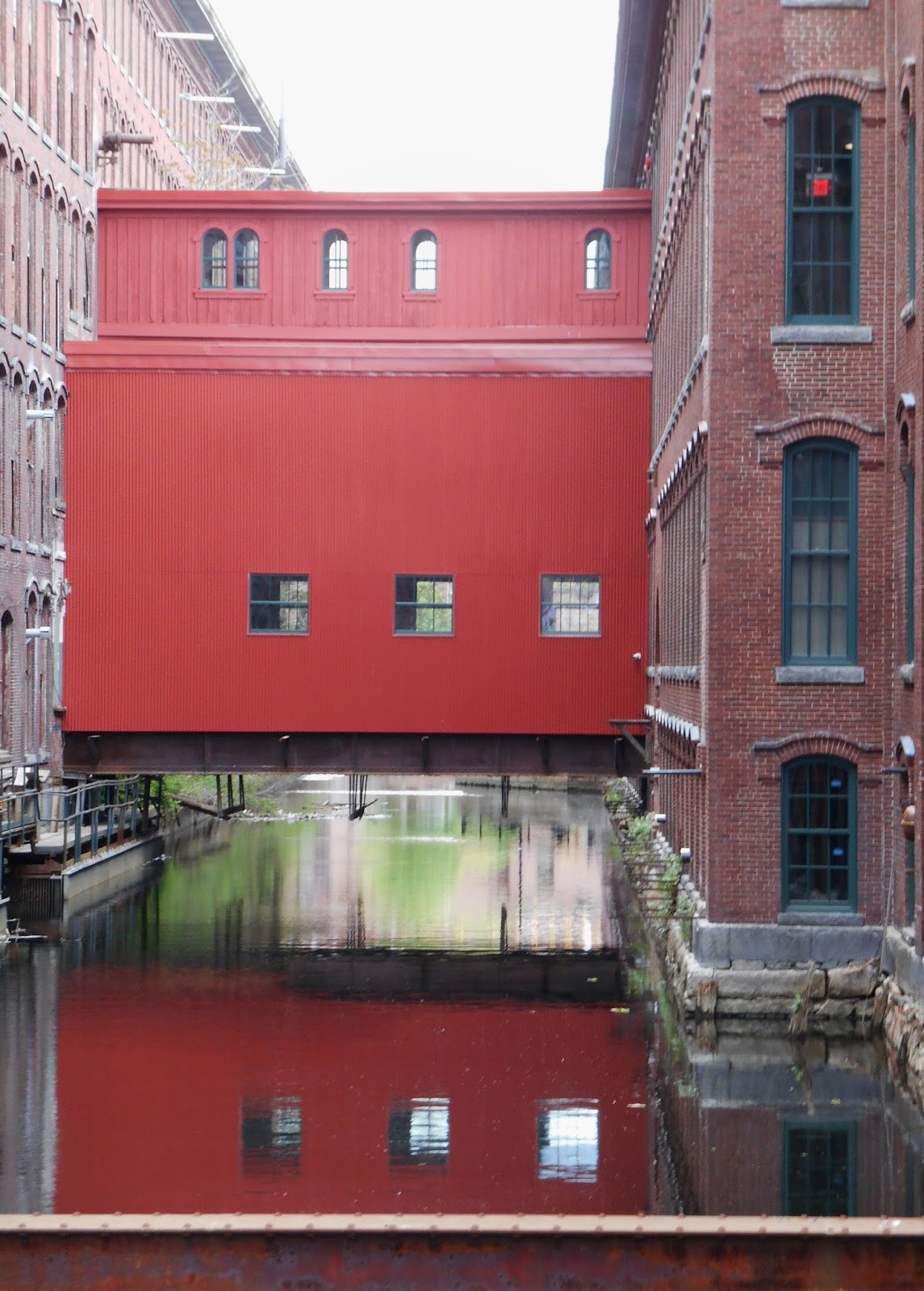
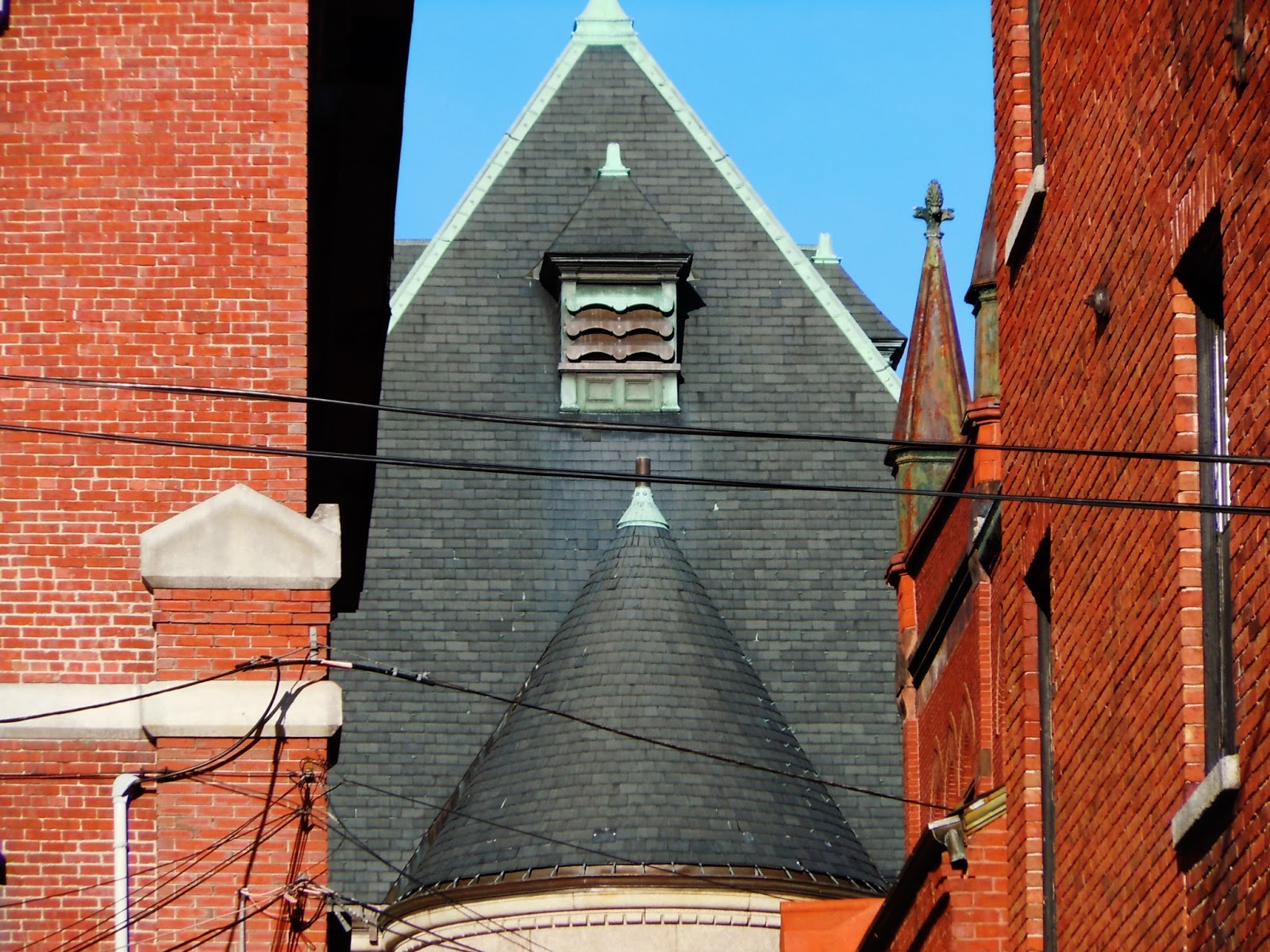
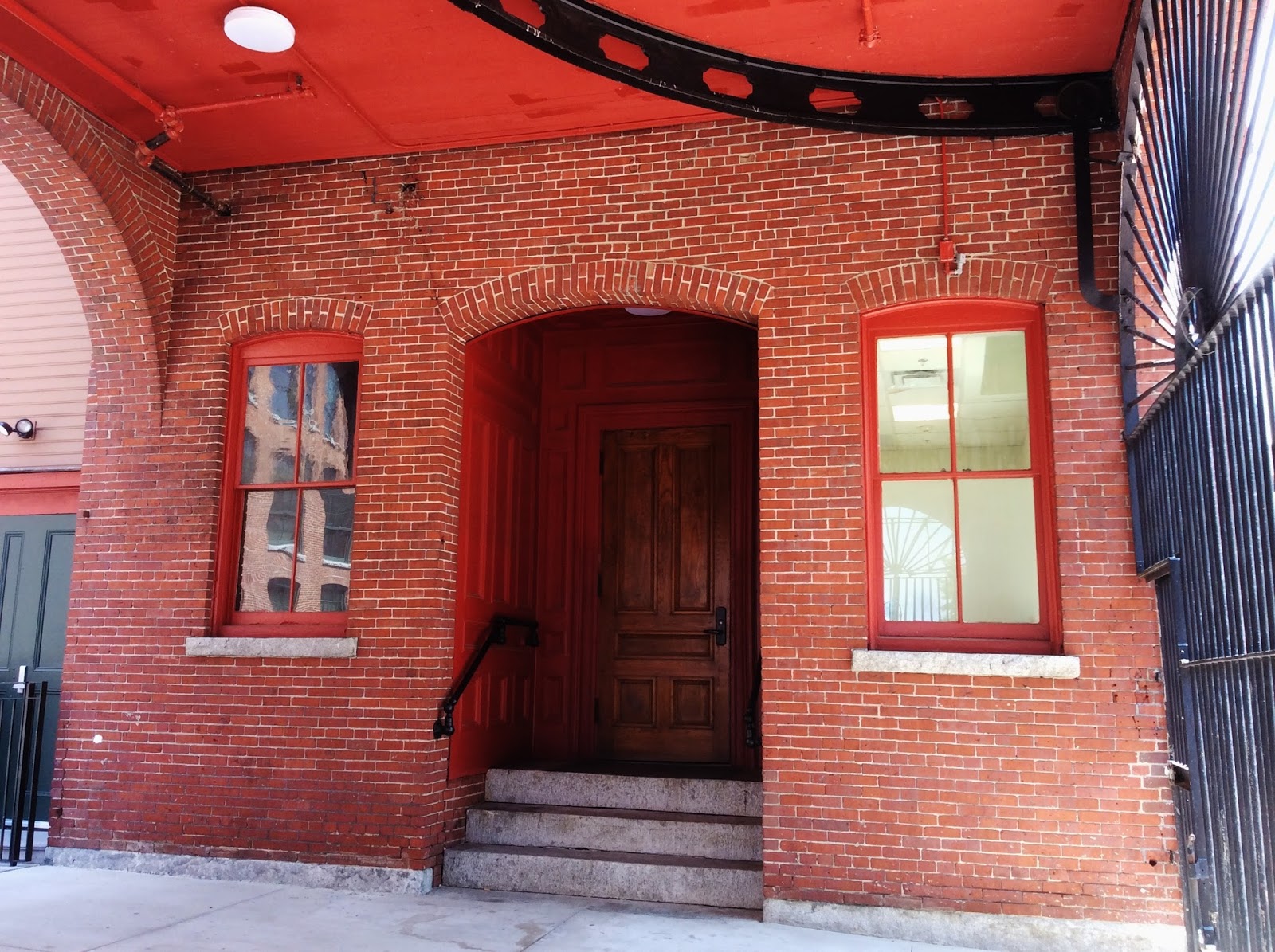
I Love the Red Colors of Lowell, Massachusetts

"There is A Lot to Like About Lowell" is the city slogan.

(See tab on right side called "Lowell Series" for many more articles about Lowell.)


Photo above of Lowell was taken by Google Earth, I used Snagit to capture this shot.
The other photos show various aspects of red bricks and other materials in buildings taken during the past several years.


Franco American School to close in Lowell

Thursday, January 14, 2016

How To Do Genealogy When You Eyesight is Failing You?


I received my first pair of glasses at age 3.

Recently, I had my first eye surgery, a cataract removed, and a new lens was put in. I had a few days of doing almost nothing because I couldn't see out of the bandaged eye and the other eye had poor eyesight. The second operation will be done in a few weeks, then my vision will be clearer, but not good enough to read, so I'll have to get new glasses. So how can I do genealogy with limited eyesight until I get new glasses in about six weeks? (If you want more information on how my genealogy volunteering has been affected in the past, see the end of the article.)

Like so many genealogists, my genealogy world consists of a lot of research, reading genealogy books and magazines, doing data entry, corresponding through emails, and some online contact with Facebook genealogy friends. All those are easy when you can see, but what if you can't? Fortunately, I know my situation is temporary, but what can I do in the meantime?


The other night, I got my answer when I listened to Drew Smith's excellent webinar Organizing Your Genealogy Research Process presented by the Illinois State Genealogical Society. My takeaway was, I should be thinking of projects and how to do them. For me, that is a lot of thinking. Like so many other genealogists, I jump from one thing to another. Anyway, during the past two days, I've thought of things I can work on, once the vision improves and I get new glasses. My list consists of things I must do to make my genealogy life easier and I will report my progress in December 2016.


1. Learn Evernote. Drew Smith mentioned Kerry Scott's book in his webinar (see #9), "How to Use Evernote for Genealogy." I plan on ordering her book in a few days. Update: I already ordered it. Reading will begin in over a month.


2. Delete many photos, 26,000 is too many on my computer and I don't need them because many are on my blogs. However,  I'm not sure what my grand total should be. Decide which ones to print, which ones to use for my Lowell posts, and which ones to use for future genealogy posts. The same goes for my iPad photos, which number over 6,000. I can begin now because the photos are large enough to see.


3. Read and delete almost all 1,300 Gmail messages. Most have been glanced at, and need a second read. There is lots of good information to save.


4. Do a better job at understanding Dropbox. I just don't get it yet, probably because of my difficulty in reading, I rarely read more than a paragraph, and even then, with macular degeneration, I miss words. So I will try hard with this. However, I did manage to "get" saving my RootsMagic7 to my iPad via the app and Dropbox. I believe it took about five hours!


5. Plan another trip to Canada for late summer. It won't be to do research, but to bring some items to the Missisquoi Museum and Archives. I'll revisit the six cemeteries where my ancestors were buried. This should be an easy plan, but fun and I look forward to it. On the last trip in 1999, I took limited photos as I didn't have a digital camera.


6. Write fewer blog posts. Most people want to write more, but I learned from doing almost a post a day for several years, it consumed so much time, good time that could have been used for learning some of the above things, like Evernote and Dropbox. My last post in December was one of my better ones, and I was quite pleased when Randy Seaver chose it to be included in his list of  Best of the Genea-Blogs - 13 to 19 December 2015So in the future, I'll try to do more of that type of post, along with whatever comes along.


7. Less time on Facebook, boy that will be hard. When I'm not on Facebook, I gain so much free time. I'll skim or read blogs but will unfollow all blogs that have light or small print. Sometimes the font is so small or is in grey color, it's impossible for me to read with macular degeneration. Sorry writers, but I must leave you.


8. I will not try to find new ancestors, I have enough. However, I will continue to review my sources, make corrections, and try to solve my major "Brick Walls." In addition, I'll add and/or correct my past blog post entries dealing with surnames or add additional findings or photos.


9. In December I started thinking about what I would I do, and the first thing that came to mind was listen to Webinars, so I signed up for quite a few. For two years, I was a subscriber to the Legacy Family Tree Webinars, but was so busy with other things, I rarely listened. I plan on renewing so I can listen to many of the old ones I've missed. This will help me spend my time, and learn. To date, I've heard the following webinars:


"Tap Into Your Inner Private Eye - 9 Strategies for Finding Living Relatives" by Lisa Louise Cooke, January 9th.


"Organizing Your Genealogy Research Process" by Drew Smith, January 12th.


"Technology and Techniques for Differentiating Two People with the Same Name" by Geoff Rasmussen, January 13th.


Tomorrow, it will be: "Snagit Software for Genealogists by Michael" by Michael Brophy, January 15th.


10. In conclusion, I'll be doing fewer blogs, looking for new ancestors and checking Facebook. I need my "free" time to do all of the above, along with taking cemetery trips, corresponding with my wonderful cousins, cleaning off the desk occasionally, buying a Flip-Pal scanner (which Thomas MacEntee first showed me in 2011, now I know I need it for my trip to Canada), backing up everything on a monthly basis, and whatever else I may have forgotten.


Background...

Ever since I was a young child, I had to wear glasses and in the beginning in grade school, I always had to sit in the front row. Throughout my schooling years, that was always the case, but later the reason included poor hearing. As a matter of fact, in my baby book, my mother wrote I got my first pair of glasses at age 3, and poor hearing was noted at age 7. And, at age 4 I had six cavities filled! Ouch. Much later in life, these problems affected my life with work and outside activities. About eight years ago, I was volunteering at five places for over five years, and working and I thought everything was fine, until...

The eyes got really bad and it was discovered I have macular degeneration. I thought I would soon be blind in one eye, so I stopped my volunteer jobs at the American Textile History Museum and the Lowell Repertory Theater (did both for about four years). I also stopped helping three genealogy societies. New England Historic Genealogical Society (NEHGS), as a proofreader and typist; the Essex Society of Genealogists (ESOG) as an index proofreader for the TEG and the Greater Lowell Genealogy Society (several positions) for many years. In addition, I taught beginning genealogy for about four years (13 total classes) at the Chelmsford Library in Massachusetts, and a Google class about 8 years ago to the Chelmsford Genealogy Club. With the last two, I stopped because of the eye and hearing problems. Now, I have a hearing aid and soon two new lenses...I can't wait to get back to my former genealogy world of reading wills, and censuses, finding and reading cemetery stones, and traveling to new places without my husband (whose eyes I used).


Thursday, December 17, 2015

The Three Unique Sources Didn't Prove Anything


George Anderson, my 3rd great-grandfather, has been a mystery to me ever since I saw the chart on the left for my father showing his ancestor was Major George Anderson. I've been very curious about his title for 25 years.

I've traced George's ancestry from his 1784 New Jersey birth back four generations. I know the names of his three wives and his nine children. This information was rather easy to find, thanks to 3 federal censuses, a state census, a book on his ancestors called, A Genealogy of the Reyniersen Family, several historical books, and the selfless help in 2008 from Dorothy Koenig, editor of the New Netherlands Connections. He died at age 94, so there was a lot of information out there, but not what I'm looking for.

The one thing missing is actual proof that George Anderson was a Major. As mentioned above, he was named Major George Anderson  in many sources I used. Such as: a small genealogy outline done by my mother, a death notice in a book I located in Salt Lake City, various pages from a manuscript I obtained from Rice University in 2009 (the word Major was written three times), a brief mention from an index card in the file of the Wisconsin Historical Society. Written on the card was, "Silver hilted dress sword worn by the grandfather of Maj. George Anderson." All these sources were useful, but I still don't know why he was called a Major.

When three new sources came my way this year, I decided my challenge would be to find proof if George was really a Major. My blog played a big part in getting help because of two new readers who helped me. The first reader was a distant cousin who googled our shared ancestor's name; the second reader enjoyed something I had written and left a comment (it had nothing to do with genealogy). Our correspondence led to my accepting a subscription to GenealogyBank.com. The third source involved George's will (I saw a better copy than the awful one I had received several months prior, thanks to Ancestry.com). Below, are the three steps I took to find information from my new sources.

In March, I received an email from Mattie, inquiring about my Adams line. As fate would have it, she is my third cousin and I was very familiar with her family. I never contacted anybody on that line because I felt I had all I needed. She mentioned a manuscript her grandfather had written and there were parts about Major George Anderson in it. Within a week, I had her typed 28 page booklet. I quickly made copies and sent it back to her. That information, though didn't solve my question as to why he was a Major, set me on the path to once again work on his line.

The next logical step was to try and find a will. The next month, I contacted the Deputy Clerk Dane County Circuit Court Record Center in Madison, Wisconsin to inquire about a will, then to get copies of it. The clerk called me after they received my written request, because the probate packet was so large. She needed to discuss what I wanted, since I had no idea, I decided on the first 14 pages (neither of us knew how large the packet was.) I paid $1 a page for an electronic image. The images were horrible and so were the copies I printed outs. I put the will matter aside until one day in September I received notice that Ancestry.com released the Wisconsin, Wills and Probate Records, 1800-1987. Within minutes of putting in his name and state, there was his file, a file with 101 pages!

Name: George Anderson
Probate Date: 6 Feb 1879
Probate Place: Dane, Wisconsin, USA
Inferred Death Year: Abt 1879
Inferred Death Place: Wisconsin, USA
Item Description: Probate Records, Box 266, T-W - Box 268, Anderson, George
Table of Contents 101 images

All the probate records turned out to be crisp and clean and I could read about 99% of it. I was lucky George had a will and a codicil. The contents won't be discussed because I plan on doing a post covering two interesting I discovered. What I was happy to find were the words Major Anderson written twice, as seen below. Only 2 pages out of 101 pages has this title.


The third bit of information regarding the name of Major George Anderson came from GenealogyBank.com. Within an hour of logging on, I was lucky to find death notices in newspapers for two of his three wives (died 1840 and 1878), and the best thing was finding George's 1879 death notice two weeks after his 3rd wife's death! Below shows the snippet of his death, and I immediately clicked on it to open it.


Seeing Major written in the above snippet for the Wisconsin State Journal was like finding the pot of gold, and it confirmed my other notice of his title and death which is shown below. As I mentioned, I also found death notices for two of his wives. The first wife, my direct line ancestor died in 1840, but I had no idea in which state, until I saw the notice. (Her children were born in 4 different states.) The notice also provided me with her father's name by printing she "was the daughter of, Capt. Jeremiah Ten Eyck of Middlesex co., N. J."

In 2008, while at the Family History Library in Salt Lake City, Utah, I found the following information: "Maj. George Anderson died at Madison, Jan 10th in the ninety-fifth year of his age. He was born on the banks of the Raritan, New Jersey, March 8th 1784; and after residing successively on Staten Island, in Pennsylvania and Illinois, he settled in Dane County in 1839 and spent most of his life as a farmer. While residing in Madison, he served two years on the Board of Aldermen, and several years as Supervisor in the County Board, serving in the latter capacity at the time of his death. He survived his third wife two weeks. He was a gentleman of the old school, enjoying good health and a bright intellect almost to the last."
From: Collections of the State Historical Society of Wisconsin. 1882 Vol. 9: 429. Wisconsin Necrology, 1879. (Book at FHL at Salt Lake City books.) I wrote a blog post about this in 2010, and it may be seen HERE.

Was George in the military? I still don't know, but I doubt it because over the course of many years, I haven't found any indication that he was. As you can see, it often takes many years and many sources to get a pretty good picture of somebody's life, but until you know everything about the person, the research should continue. It also helps to have an interested cousin and a helpful reader, thank you both.


As an after thought, I've decided to show his marriage record for 1841, when George married his second wife.


Disclosure: GenealogyBank.com has provided me with a subscription to their product, a newspaper subscription to use and I am under no obligation to write a review. The product was mentioned in this post because I tried it out and was more than happy with the results.
----------------------------------------------------
To those who kindly responded with helpful ideas.
I re-read the will of George's father, Simon and it mentions son George four times. It also said, :Sons, George and Cornelius lands whereon I now live that my father bought of Albert Voorhees (315 acres). Son, Georege, negro man, Nene, my silver hilted sword, silver watch and 6 silver tea spoons." (His other son also received a negro man.) Now I know where the "silver hilted sword" came from.
I also put in the name of Major Anderson (as his first name) on Ancestry.com and he didn't come up. My finding, he was named George, not Major.


There is also a write-up about him, and in-part, it reads," Major Anderson has held several offices, the duties of which he has faithfully and honestly discharged. He was for several years supervisor of the town of Sun Prairie, chairman of the county board, under-sheriff three years, collector of taxes of Dane and Sauk counties, and settling his accounts without making a mistake. He was also deputy United States marshal. He is now living in comfortable retirement upon the interest of the money his industry and economy have enabled him to accumulate. Major Anderson's natural capabilities enabled him to enjoy the full benefit of the society of such cultivated gentlemen as Nicholas Biddle, John C. Craig and W. R. Johnson of Virginia, with whom he was intimately connected in business for five years, and his retentive memory enables him to narrate many interesting incidents characteristic of those gentlemen. In illustration of the ready wit and imperturbable self-possession of Colonel Johnson he relates that on his return to Philadelphia from New Jersey, when the great race between Mr. Johnson's horse Boston and Mr. Gibbon's mare Fashion had just been run, and while still on the crowded ferry-boat, Colonel Johnson felt some one's hand in his pocket, and instantly clasping and holding it, turned his head and said, "My friend Mr. Gibbon won the race to-day." Although Major Anderson is in his ninety-second year, his bodily health is I good, his mind cheerful, his manners easy and dignified, and looks very like, as he is, a gentleman of the olden time. His present vigor of mind and body is an eloquent commentary upon temperance, industry, and cheerfulness, that badge of a gentleman. If the prayers of his friends avail he will complete a century."